Aviation cases are governed by rules that appear nowhere else in personal injury law — an inadmissible government report, an eighteen-year repose period, and a treaty deadline that cannot be tolled.
Commercial airline travel in the United States is extraordinarily safe. General aviation is where nearly all the fatalities are. The FAA estimated 195 fatal general aviation accidents and 337 deaths in fiscal 2024, at a rate of 0.68 per 100,000 flight hours — the lowest since the agency began tracking it in 2009, and still the source of essentially all U.S. aviation deaths in a typical year.
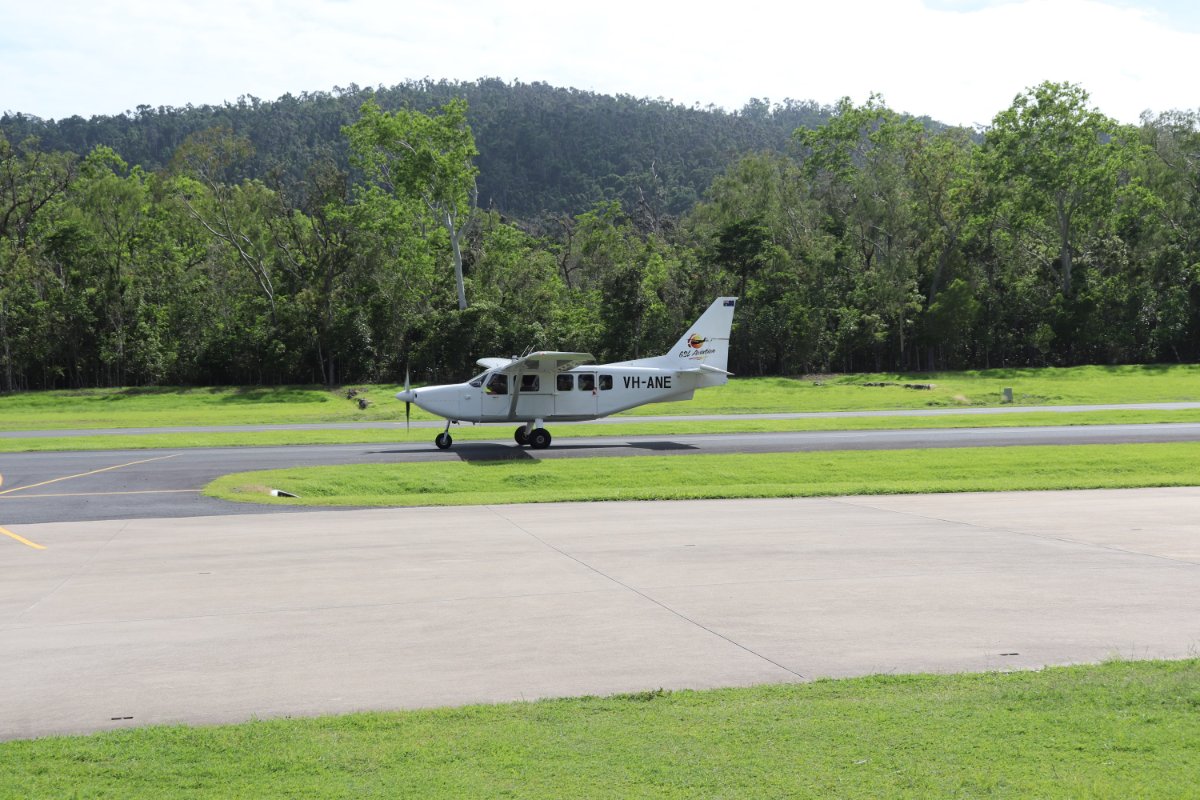
These cases involve private aircraft, charter and air-taxi operations, flight instruction, agricultural aviation, helicopter operations including air medical and oilfield support, and occasionally commercial airline events.
They also involve a set of legal rules that do not exist in any other kind of injury case, and getting them wrong early can end a claim before anyone reaches the merits. If you or your family has been affected by an aircraft accident, call (210) 832-9090.
49 U.S.C. § 1154(b) provides that “no part of a report of the Board, related to an accident or an investigation of an accident, may be admitted into evidence or used in a civil action for damages.” That sentence is why you will read everywhere that “the NTSB report is inadmissible.”
It is only half the rule, and the other half is the half that matters. 49 C.F.R. Part 835 draws a distinction the statute does not spell out:
A Board accident report contains the Board’s determinations and its probable cause finding. That is what is barred.
A factual accident report contains the investigator’s findings, and the regulation states expressly that the Board “does not object to, and there is no statutory bar to, admission in litigation of factual accident reports.” Board employees may testify as to the factual information they obtained during the investigation, including factual evaluations in those reports — though they may not give expert or opinion testimony, and may not testify about safety recommendations or safety studies.
So the correct statement is this: the probable-cause finding is inadmissible; the underlying factual record generally is not. Wreckage documentation, maintenance records, radar and air traffic control data, witness statements, and the factual reports themselves are ordinarily available. That distinction is the whole of aviation practice, and a case built on the assumption that the NTSB file is off-limits leaves most of the evidence on the table.
Cockpit voice and image recordings are governed separately, under § 1154(a), with its own restrictions on discovery and use.
The General Aviation Revitalization Act of 1994 bars a damages action against the manufacturer of a general aviation aircraft, or of a component, system, subassembly or part, in its capacity as a manufacturer, where the accident occurred more than 18 years after delivery.
Three things about GARA are routinely missed.
It rolls. Under § 2(a)(2), for any new component, system, subassembly or part that replaced another or was added to the aircraft, the eighteen years starts over on the date of that replacement or addition. A recently overhauled engine or a newly installed avionics unit carries its own fresh clock. This is the practitioner’s principal path around the bar, and it turns entirely on the maintenance logs.
It has four exceptions. The bar does not apply where the manufacturer knowingly misrepresented to, or concealed or withheld from, the FAA required information material and relevant to performance or maintenance; where the injured person was a passenger receiving treatment for a medical or other emergency (air ambulance); where the person was not aboard the aircraft (ground victims); or in an action brought under a written warranty.
It only shields manufacturers. GARA does nothing for operators, pilots, flight schools, charter companies, maintenance and repair organizations acting as maintainers, fuel suppliers, air traffic control (through the Federal Tort Claims Act), or airport operators. It is a manufacturer shield, not an aviation-claim shield, and the most common error is treating an eighteen-year-old airframe as the end of the inquiry.
Note also the statutory definition: a “general aviation aircraft” is one that had a maximum seating capacity of fewer than 20 passengers when its type or airworthiness certificate was originally issued, and was not engaged in scheduled passenger-carrying operations at the time of the accident.
If the flight was international carriage between two treaty states, the Montreal Convention of 1999 governs — and it displaces ordinary tort law almost entirely.
Article 17(1) makes the carrier liable for death or bodily injury on condition only that the accident took place on board or during embarking or disembarking. Article 21 creates two tiers: the carrier cannot exclude or limit liability up to the threshold (currently 151,880 Special Drawing Rights per passenger, effective 28 December 2024), and above it escapes only by proving the damage was not due to its negligence or was solely due to a third party.
Article 29 makes the Convention exclusive and bars punitive, exemplary and other non-compensatory damages entirely — a significant departure from a domestic Texas case.
And then Article 35, which is the single most dangerous deadline in this area of law. The right to damages is “extinguished” if an action is not brought within two years from the date of arrival, the date the aircraft ought to have arrived, or the date carriage stopped. Courts treat this as a statute of repose rather than a limitations period, which means it is generally not subject to tolling — not for minority, not for discovery, not for negotiations with the carrier. When it passes, the claim is gone.
Article 33 allows suit in five places: the carrier’s domicile, its principal place of business, the place of business where the contract was made, the place of destination, and the “fifth jurisdiction” — the passenger’s principal and permanent residence, where the carrier operates services. Choosing among them is a strategic decision with real consequences for damages.
Wreckage, maintenance logbooks, engine and airframe records, avionics and any recorded data. Where possible, follow the NTSB investigation closely rather than waiting for its report.
The probable-cause finding will not come into evidence. The factual record generally will. The case is built from the second, not the first.
Every replaced or added component restarts its own eighteen-year clock. The logbooks decide whether a manufacturer stays in the case.
Operator, pilot, flight school, charter company, maintenance organization, fuel supplier, ATC, airport operator — none of them are protected by GARA.
No. The Board’s probable-cause determination is inadmissible in a civil action under 49 U.S.C. § 1154(b), and it is not binding on anyone. The NTSB investigates to improve safety, not to determine legal rights or liabilities — a point the statute makes expressly. The factual record the investigation generated is generally available and frequently supports a different account.
Very likely. GARA’s eighteen-year repose protects manufacturers only, and it restarts for any component that was replaced or added — so a recently overhauled engine or newly installed part carries its own clock. GARA also does nothing for the operator, the pilot, the flight school, the charter company, the maintenance organization, the fuel supplier, air traffic control, or the airport. Airframe age is the beginning of the analysis, not the end.
It depends entirely on the flight. A domestic Texas claim generally runs two years from the injury, or two years from death in a wrongful death case. An international flight under the Montreal Convention runs two years under Article 35 — but courts treat that as a repose period that cannot be tolled, which makes it far less forgiving. Claims involving air traffic control require an administrative claim under the Federal Tort Claims Act before suit. Get these dates established immediately.
We handle aviation matters from San Antonio and work with the technical experts these cases require — accident reconstruction, powerplant and airframe specialists, human factors, and meteorology. Where a case calls for resources or specialized experience beyond what serves the client best, we will say so directly rather than hold onto it.
An international flight carries a two-year deadline that courts generally will not toll for any reason. Call (210) 832-9090.