
The counties where these cases arise are an hour from our office. The firms currently advertising for them are two hundred miles away.
The Railroad Commission of Texas maps the Eagle Ford across 27 counties — roughly 50 miles wide and 400 miles long, averaging 250 feet thick, spanning RRC Districts 1 through 6. Atascosa, Bastrop, Bee, Brazos, Burleson, DeWitt, Dimmit, Fayette, Frio, Gonzales, Grimes, Karnes, La Salle, Lavaca, Lee, Leon, Live Oak, Madison, Maverick, McMullen, Milam, Robertson, Walker, Washington, Webb, Wilson and Zavala.
The southern and western counties in that list — Karnes, La Salle, Frio, Atascosa, McMullen, Live Oak, Wilson, Dimmit, Gonzales, DeWitt — sit within about an hour to two hours of Bexar County. That is a service radius, a commute for the crews who work there, and the venue where these cases are filed.
Sadovsky & Ellis handles oilfield injuries, well-site fatalities, and the heavy-truck crashes that come with them, across the South Texas play. Call (210) 832-9090.
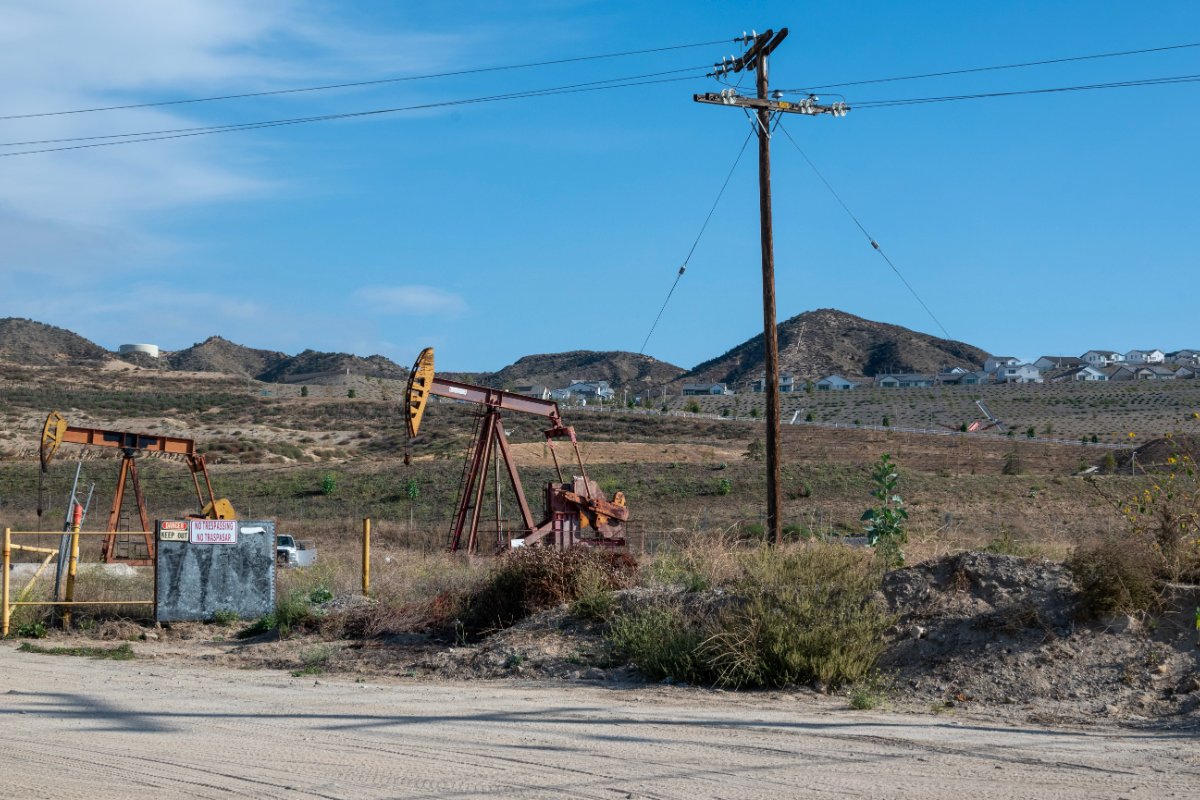
The Dallas Fed’s Eagle Ford tracking put the region at roughly 41 rigs, about 1.2 million barrels of oil per day and 7 Bcf per day of natural gas, supporting around 399,000 jobs across the Eagle Ford counties. Karnes County alone produces about 0.3 million barrels a day; Karnes, DeWitt and La Salle together account for something close to half of Eagle Ford oil.
Every one of those barrels moves on a two-lane farm-to-market road before it reaches a pipeline or a terminal. That is why the fatality data for this industry is dominated not by dramatic well-site events but by traffic. NIOSH found vehicle incidents caused 26.8% of oil and gas extraction deaths nationally between 2014 and 2019 — the single largest category — with explosions at 14.5%. OSHA puts it more directly: roughly four of every ten workers killed on the job in this industry die in highway incidents.
The crash numbers in the counties ringing Bexar reflect that. In 2024, TxDOT recorded commercial motor vehicle crashes at Guadalupe 423, Comal 205, Atascosa 129, Medina 78, Wilson 78 — and Bexar itself at 2,684. Together the greater San Antonio area produced on the order of 3,600 CMV crashes in a single year.
Oilfield trucking runs on a different clock, and carriers get it wrong often enough that it is worth checking in every case.
49 C.F.R. § 395.1(d)(1) allows, for commercial motor vehicles “used exclusively in the transportation of oilfield equipment, including the stringing and picking up of pipe used in pipelines, and servicing of the field operations of the natural gas and oil industry,” any period of 8 consecutive days to end with the beginning of an off-duty period of 24 or more successive hours — a shortened restart.
Section 395.1(d)(2) goes further: for “specially trained drivers of commercial motor vehicles that are specially constructed to service oil wells,” on-duty time does not include waiting time at a well site, and that waiting time is not counted in the 14-hour period.
That second exception is narrow by design. It requires both a specially trained driver and a purpose-built well-servicing vehicle. A carrier that applies it to an ordinary tractor-trailer hauling sand or water has not found a loophole — it has created a violation, and the logs will show it.
Add the Texas intrastate rule under 37 Tex. Admin. Code § 4.12 — 12 hours driving after 8 hours off, no driving after 15 hours on duty — and a great deal of Eagle Ford hauling is running on a fatigue schedule quite different from what most people assume.
An Eagle Ford case is usually filed where the incident happened or where a defendant resides. That means a district court in Karnes City, Cotulla, Pearsall, Jourdanton, Tilden, George West, Gonzales or Cuero — small courthouses with small dockets and jury pools drawn from communities that know this industry firsthand.
Proximity is not a marketing point, it is an operational one. Site inspections happen on short notice. Equipment gets returned to rental yards in Pleasanton or Kenedy. Witnesses are crews who rotate out and move to the next job in another county. A firm that can be at a location the same afternoon is doing a different quality of investigation than one dispatching an investigator from Houston or Sugar Land.
It also matters for the client. Oilfield workers and their families in these counties should not have to drive to another metro to meet their lawyer.
Same-day or next-day inspection and photography before equipment is released, the pad is cleaned, or the crew rotates out.
Operator, drilling contractor, wireline, pressure pumping, trucking, rental tools, well-site supervision. The daily reports name them all.
Chapter 127’s insurance exception means the master service agreement usually determines which carrier funds the case, regardless of who is named as a defendant.
Where a truck is involved, the § 395.1(d) exceptions are checked against the actual vehicle and the actual driver training — not against what the carrier asserts.
Usually in the county where the incident occurred or where a defendant resides, which for a well-site injury generally means the county of the lease. That is a feature rather than a problem — these are jury pools that understand the industry. We handle the filing and the travel; you do not have to.
Often it expands it. Your own employer may be shielded by the workers’ compensation exclusive remedy if it subscribes, but that bar does not protect anyone else on the pad. The operator, the drilling contractor, and the other service companies are all potential third-party defendants. Whether your employer subscribes at all is the first thing to determine — a great many oilfield service contractors are non-subscribers.
That is still very much a case, and statistically it is the most common way workers in this industry are killed. Whether it is a workers’ compensation claim, a third-party claim against another motorist or carrier, or both depends on whether you were in the course and scope of employment and who was at fault. The hours-of-service analysis under § 395.1(d) is frequently central.
As soon as possible. Equipment returns to rental yards, gas monitor and telematics data is overwritten, sites are restored, and crews rotate to other counties. The six-month federal retention floor for a driver’s records of duty status applies out here the same as anywhere else.
We can be on site quickly, and we know these counties. Call (210) 832-9090 for a free consultation.