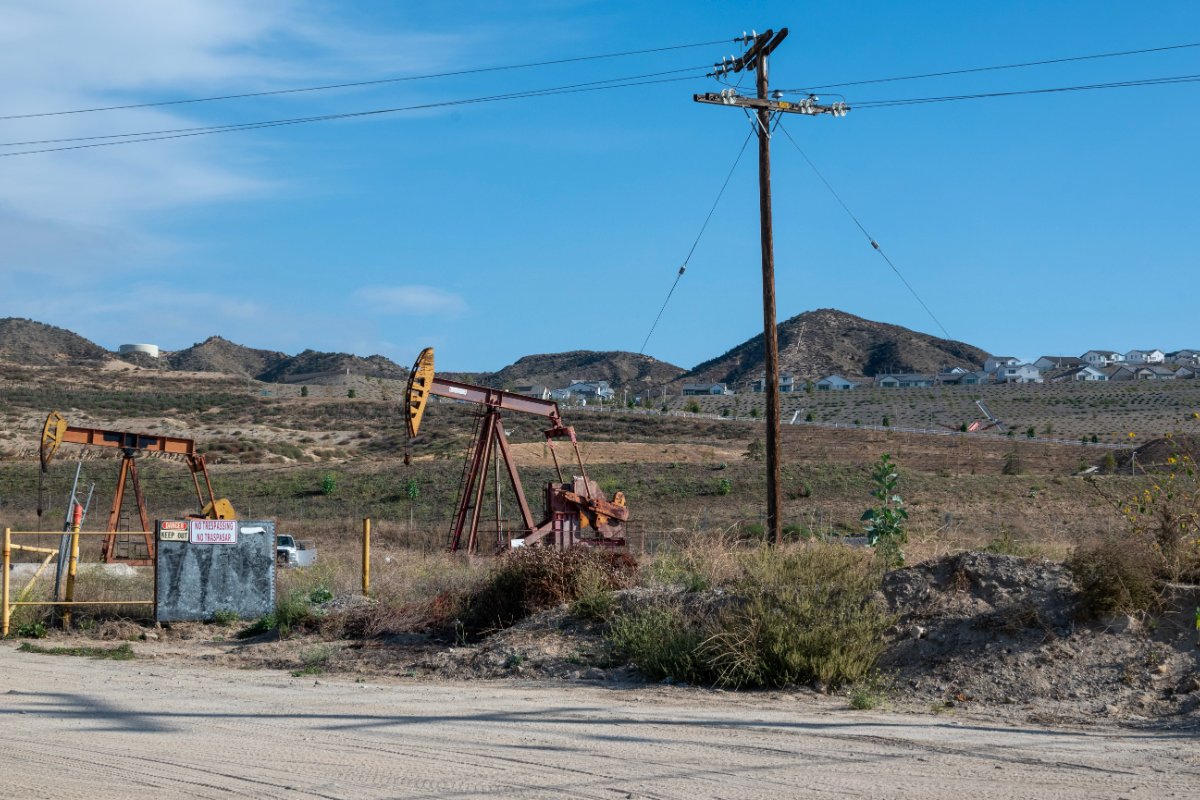
Karnes County is among the highest-producing counties in the Eagle Ford, and it is about an hour from our office. That matters more than it sounds like it should.
Karnes County produces roughly 0.3 million barrels of oil per day. Together with DeWitt and La Salle, it accounts for close to half of all Eagle Ford oil production. Karnes City, Kenedy and Falls City sit at the center of it.
That production generates two kinds of injury case, and in this county they overlap constantly. There are well-site injuries — flash fires during tank gauging and flowback, blowouts, hydrogen sulfide exposure, falls, struck-by injuries, crane and rigging failures. And there are haul-route crashes on US-181, SH-72, SH-123 and the farm-to-market roads that connect the pads to the highways.
Nationally, vehicle incidents cause more oil and gas extraction deaths than any other single category — 26.8% per NIOSH, against 14.5% for explosions. In Karnes County that statistic is a description of daily life.
Karnes County cases are filed in Karnes City. The jury pool is drawn from a community where a great many people have worked in this industry or have family who do — which cuts in more than one direction and is worth understanding rather than assuming.
The proximity argument is practical. Equipment involved in a well-site incident goes back to a rental yard, often in Kenedy, Pleasanton or Cuero, within days. Sites are cleaned. Crews rotate to the next job in another county and sometimes another state. A firm that can put someone on the ground the same afternoon documents a different case than one dispatching an investigator from Houston or the Dallas suburbs.
It matters for clients too. An injured worker and his family in Kenedy should not have to drive three hours to sit down with their lawyer.
Did your employer carry workers’ compensation? A great many oilfield service contractors do not. Under Tex. Lab. Code § 406.033(a), a non-subscribing employer cannot argue that you were contributorily negligent, that you assumed the risk, or that a fellow employee caused the injury. Your own share of fault does not reduce your recovery at all. If the employer did subscribe, comp is generally the exclusive remedy against it under § 408.001 — with a narrow exception in § 408.001(b) allowing the surviving spouse or heirs of the body to recover exemplary damages where a death was caused by gross negligence.
Who else was on the pad? The exclusive remedy protects your employer and nobody else. A working Karnes County location typically has an operator, a drilling or workover contractor, a wireline company, a pressure-pumping company, one or more trucking companies, a rental-tool supplier and a well-site supervision company. Each is a potential third-party defendant to the others’ employees, and that is where most of the recoverable value sits.
Expect the master service agreement to matter enormously. Under Chapter 127 of the Civil Practice and Remedies Code, indemnity for a party’s own negligence is void — but § 127.005 permits it where supported by liability insurance, capped at the coverage each side agreed to carry (or $500,000 for a unilateral obligation). Nearly every MSA out here is built to fit that exception, which means the contract and its insurance schedules determine which carrier actually funds the case.
Karnes City, Kenedy, Falls City or wherever is easiest. There is no charge for the consultation and no obligation.
Immediate written preservation demands, and inspection before equipment is returned to a rental yard or the location is restored.
Whether your employer subscribed to workers’ compensation, and the master service agreement with its insurance schedules.
The employer’s § 1904.39 report to OSHA — eight hours for a fatality, twenty-four for a hospitalization or amputation — plus the inspection file, gas monitor logs, JSAs, permits and training records.
Usually the suit is filed where the incident occurred or where a defendant resides, which for a Karnes County well site generally means the district court in Karnes City. We handle the filing and the travel. Venue questions can get more complicated where multiple defendants are located in different counties, and that is worth analyzing rather than assuming.
No. Whatever is said informally, the company’s obligations are defined by whether it subscribed to workers’ compensation and by the documents you sign. If someone asks you to sign a release or settlement, note that a pre-injury waiver is void under Tex. Lab. Code § 406.033(e), and a post-injury waiver is invalid unless it was voluntary, knowing, conspicuous, in writing, followed a medical evaluation, and was signed no earlier than the tenth business day after the injury was first reported. Waiting also costs you evidence.
Yes, and statistically it is the more common one. Vehicle incidents are the leading cause of death in oil and gas extraction. Whether your case is a workers’ compensation claim, a third-party claim, or both depends on who was at fault and whether you were in the course and scope of employment. The hours-of-service analysis matters here — the oilfield exceptions in 49 C.F.R. § 395.1(d) are narrow and frequently misapplied.
Nothing up front. We handle these cases on a contingency fee, so there is no hourly charge and no fee unless there is a recovery. Case expenses are advanced by the firm. We put the fee agreement in writing and go through it with you before you sign anything.
We are about an hour away and we can be there today. Call (210) 832-9090.