
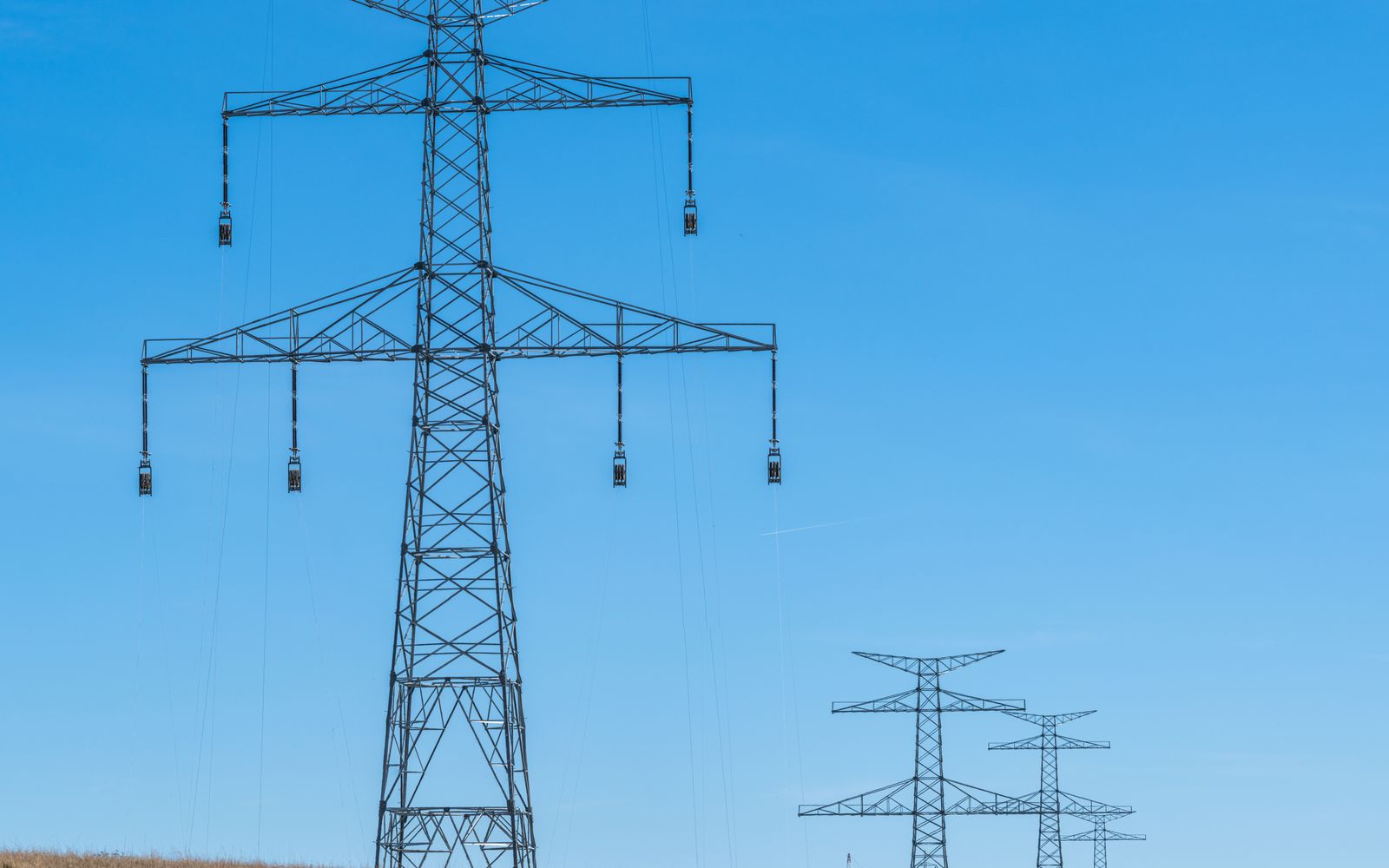
CPS Energy and AEP Texas are routing more high-voltage line through Bexar County than at any time in the county's history. If a right-of-way agent has contacted you, the easement they are offering is negotiable and the number is not final. We represent landowners only.
If a utility wants a transmission line easement across your Bexar County land, you usually cannot stop the taking, but Texas law gives you three things the offer letter will not emphasize: a chance to challenge the route at the Public Utility Commission before it is fixed, a bona fide offer backed by a certified appraisal you are entitled to see, and compensation for both the easement strip and the loss in value to the rest of your property. The first offer is almost always built on the strip alone.
Each project below has a Public Utility Commission docket, a utility right-of-way team, and a set of landowners who will receive, or have already received, survey requests and offer letters. Status is as of October 2026; click a project for what it means for your parcel.
About 370 miles from CPS Energy's Howard Road Station in southwest Bexar County to AEP's Solstice Station near Fort Stockton. The southern leg of the ERCOT Permian Basin 765 kV build.
Roughly five-mile extension looping the Cagnon-to-Howard Road line into a new Omicron substation in west Bexar County. 31 alternative routes were filed; the PUC selected Route 26.
A 46-mile line from CPS Energy's Spruce Station in Bexar County to the STEC Pawnee Station in Karnes County, crossing Loop 1604 and the Bexar–Wilson line. Filed as a single route.
New 138 kV line across the Bexar–Medina county line serving growth on the west side of the metro. Approved by the PUC; construction and right-of-way work follow the order.
Double-circuit 138 kV line on steel monopoles from the new Legend Falls substation to STEC's San Geronimo Substation near Potranco Road and CR 381, in the far-west Bexar and Medina growth corridor.
New substation and transmission line in northwest Bexar County near SH 151 and Wiseman Boulevard, built to serve a large commercial load.
Intervene within 30 days of the CCN filing to be heard on where the line goes. Blu Lacy–Howard 765 kV is expected to be filed in early 2027.
Also in planning: ERCOT's regional planning group has reviewed a new Hill Country-to-Bergheim 345 kV line and related rebuilds in northern Bexar and Kendall Counties to address voltage problems on the north side. A CCN filing would be required before any route is fixed. If you own land between Helotes, Fair Oaks Ranch and Bergheim, the time to pay attention is before the notice letters go out.
A transmission line reaches your land through two separate legal processes, and most landowners only learn about the second one. The route is decided at the Public Utility Commission in a Certificate of Convenience and Necessity (CCN) case under Utilities Code § 37.056. The price and the easement terms are decided afterward, parcel by parcel, under Chapter 21 of the Property Code. Rights you do not use in the first proceeding are gone by the second.
Owners within the study corridor receive a landowner notice with a map, the alternative routes and an intervention deadline. Missing it forfeits your voice on where the line goes.
The Commission weighs community values, parks, historic and aesthetic values, environmental integrity and use of existing corridors. The 180-day clock makes early, specific objections count most.
Once the route is fixed, right-of-way agents ask to survey. A limited written access agreement is normal; an option or easement signed at the same visit is not.
The utility must deliver the Landowner's Bill of Rights, a written offer, the instrument it wants signed and a certified appraisal covering the strip and the remainder. § 21.0113.
At least 30 days after the initial offer, equal to or above the appraisal, with at least 14 days to respond. Most cases settle in this window, on terms set by the owner's own appraisal.
If no agreement, the utility files in the county where the land lies. The court appoints three disinterested Bexar County landowners as special commissioners; each side may strike one.
An informal evidentiary hearing on value. The award sets the deposit the utility must make to take possession and start construction.
Either side may object under § 21.018 and try compensation to a Bexar County jury. The utility builds in the meantime; the owner is paid when the case ends, with interest.
A 138 kV line generally needs a right-of-way on the order of 100 feet; 345 kV lines run wider, and the 765 kV structures on the Howard–Solstice route need an easement considerably wider than that, with structures that can stand well over 150 feet tall. Inside the strip you keep title but lose most practical use: no structures, no trees above a set height, access roads the utility can build, and vegetation management it controls. Outside the strip, the land is still yours and still fenced, but it is a different property to a buyer.
Section 21.042 of the Property Code requires the condemnor to pay both numbers: the market value of the easement strip and the difference in the market value of the remainder before and after the taking, considering the use the utility will make of the easement. For a Hill Country tract north of Helotes or a ranch along the Medina County line, the remainder damage is usually the larger figure: a 765 kV structure line changes the building envelope, the view that justified the price, the ability to subdivide, and what a lender will finance. Utility appraisals routinely assign that damage a value of zero. A competent counter-appraisal does not.
Transmission easements last as long as the line does, which in practice means forever. The instrument the right-of-way agent brings is drafted by the utility for the utility. Every term below is negotiable, and in a Bexar County condemnation the owner's leverage on terms is highest before the petition is filed.
Property Code § 21.0114 lists the terms a private entity must include in a pipeline or electric transmission easement it offers under the eminent domain chapter: maximum number of lines, maximum height and width, access rights, exclusivity, assignment, restoration and more. AEP Texas is an investor-owned utility and the statute applies to it in full. CPS Energy is a municipally owned utility of the City of San Antonio, and it may take the position that § 21.0114's mandatory-terms list does not bind it. The bona fide offer rules of § 21.0113 and the Landowner's Bill of Rights still apply to CPS Energy, but the easement form it presents can be thinner than what a private utility must offer.
On a joint project like Howard–Solstice, where the two utilities divide ownership of the line at a point along the route, which company owns the segment crossing your parcel can decide which statutory protections you start with. Either way, the terms in § 21.0114 are the right checklist for what a Bexar County transmission easement should say, and they are the terms we negotiate into every instrument, whether the statute compels it or not.
The notice letter, the map, the Bill of Rights, the survey request, the draft easement and the appraisal, if one has been produced. Each has a date that matters.
A written survey access agreement with conditions (notice, gates closed, no clearing, repair of damage) is reasonable. An easement or a price option is a different document.
You are entitled to both before a lawful final offer. An agent who will not produce them has not made a bona fide offer, and the suit cannot be filed until one is made.
Photographs and video of fences, pastures, improvements, trees, views, water features and roads, dated, from fixed points you can return to.
We read the offer, the easement and the appraisal at no charge and tell you whether the number is defensible, what terms are missing, and what a counter-appraisal of your tract would likely show.
Bexar County in all directions from Loop 1604: Helotes, Grey Forest, Fair Oaks Ranch, Castle Hills, Hollywood Park and the north side; Von Ormy, Somerset, Elmendorf and the Howard Road corridor on the south and southwest side; Potranco, Culebra and the SH 151 corridor on the west side. The same lines run on into Medina, Bandera, Atascosa, Wilson, Kendall, Comal and Guadalupe Counties, and we represent owners there as well. Condemnation suits are filed in the county where the land sits, and the special commissioners are drawn from that county.
Our broader condemnation practice, including TxDOT and pipeline takings, is described on the eminent domain overview, the pipeline easement page, and the New Braunfels and Boerne takings page.
Usually not once the Public Utility Commission has issued the Certificate of Convenience and Necessity for a route across your parcel. The realistic opportunity to move the line is in the PUC routing case, by intervening before the deadline in the landowner notice. After the route is fixed, the fight is over the easement terms and the compensation, and that fight is worth having.
It depends on voltage and structure design. A 138 kV line typically needs a right-of-way on the order of 100 feet. 345 kV lines run wider, and the 765 kV structures on the Howard–Solstice route require an easement considerably wider still, with structures well over 150 feet tall. The width is a term of the easement and should be stated as a fixed number with a surveyed location, not a centerline and an estimate.
Texas courts have generally allowed a condemning entity to enter for surveys and inspections needed to prepare its application and appraisal, and refusing all access tends to produce a lawsuit over access rather than a better outcome. The better course is a written access agreement limiting what the survey crew may do, requiring notice, and making the utility responsible for damage. Do not sign an easement or price option at the same time.
Typically yes for grazing, crops, hunting, fencing and driveways, but only to the extent the easement says so. A utility easement form often reserves to the utility the right to remove anything it later deems an interference. Reserved uses should be written into the instrument expressly.
Under Property Code section 21.042 the owner is entitled to the market value of the easement strip plus the damage to the remainder, measured by the difference in the market value of the rest of the tract before and after the taking, considering the use the utility will make of the easement. On most Bexar County and Hill Country tracts the second number is larger than the first, and it is the one the utility's appraisal most often sets at zero.
It is a statement prepared by the Texas Attorney General that a condemning entity must deliver with its initial offer under Property Code section 21.0112. It summarizes the bona fide offer process, your right to an appraisal, the special commissioners' hearing and your right to a jury. Receiving it means the entity is treating your parcel as one it intends to acquire, by agreement or by condemnation.
The initial review of the offer, the appraisal and the draft easement is free. Fee arrangements for representation, including contingency arrangements tied to the improvement over the utility's offer, are explained in writing before you decide anything.
The approved route, what happens next in Bexar, Medina and Bandera Counties, and how 765 kV easements differ.
Learn moreAdequate compensation, the bona fide offer, special commissioners and trial under Chapter 21.
Learn moreCommon-carrier status, the section 21.0114 easement terms, and remainder damage on ranch land.
Learn moreTxDOT and transmission-line condemnations in Comal, Guadalupe and Kendall Counties.
Learn moreOffer letters carry deadlines. Call for a free review of the offer, the appraisal, and the easement terms.